
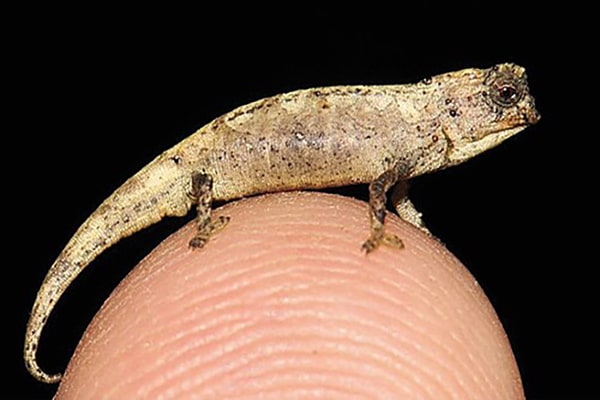
Wonder of Madagascar, Brookesia babe fascinates scientists, nature enthusiasts and travelers looking for unique experiences. Recently discovered in the humid forests of the north of the island, this tiny chameleon is now considered the smallest known reptile in the world. Barely bigger than a fingernail, it alone embodies the extraordinary Malagasy biodiversity and underlines the crucial importance of preserving the forest ecosystems which shelter these living treasures.
Observing the Brookesia nana in its natural habitat is a rare experience that attracts more and more ecotourism enthusiasts to Madagascar. This species lives in the leaf litter of primary forests, a fragile environment which directly depends on the good health of the canopy, ambient humidity and overall ecological stability. So, the simple presence of this microscopic reptile becomes a valuable biological indicator of the quality of the ecosystem. Responsible tourism not only makes this natural wealth known to the world, but also to generate essential income to finance the protection of these forest areas.
Brookesia nana highlights a fundamental aspect of tourism in Madagascar : the discovery is not limited to large lemurs or spectacular landscapes, it is also found in the infinitely small. Curious travelers, accompanied by trained local guides, learn to observe, to slow down, to understand the delicate balance of the forest. This educational approach strengthens the ecological awareness of visitors and promotes the knowledge of local communities., who become the guardians of this exceptional biodiversity.
Preserving the habitat of Brookesia nana is today a major issue in the face of deforestation, bush fires and uncontrolled exploitation of natural resources. By highlighting this wonder of Madagascar in responsible tourist circuits, tourism stakeholders contribute directly to international awareness. Each supervised visit, each guided hike, every night spent in an ecolodge near protected forests supports an economic model that favors conservation rather than destruction.
This tiny chameleon is also a great communication tool to promote sustainable tourism. Its unique character, almost unbelievable, attracts media attention, biologists and travelers from all over the world. It thus becomes a natural ambassador of Malagasy biodiversity.. The photos, stories and sharing on social networks help to raise awareness of the ecological importance of these forests and encourage respectful tourism, far from mass tourism.
Eventually, Brookesia nana reminds us that Madagascar is a land of contrasts and surprises, where you can go from huge baobabs to one of the smallest reptiles in the world in just a few days of travel. This wonder of Madagascar demonstrates that the wealth of the island lies as much in the grandeur of its landscapes as in the fragility of its micro-habitats. For Malagasy tourism, it is a unique opportunity to promote exceptional biodiversity while strengthening the conservation actions essential to its survival.